

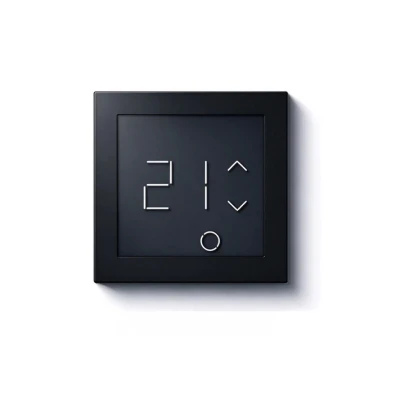
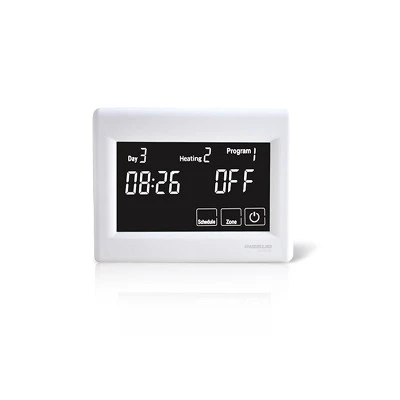
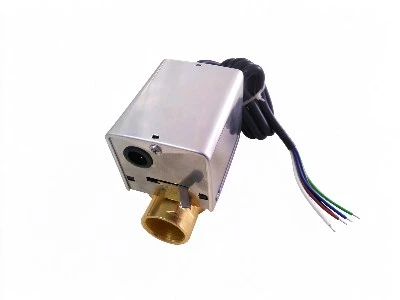
Digital timers are primarily categorized into four types based on their control method.
1. Digital Timers with On-Delay Control
On-delay control refers to a method where contacts engage only after a specified duration has elapsed-essentially introducing a delay before the operation begins. While this ensures that contacts quickly return to their original state when power is cut, there is an inherent time lag between the switching of the contacts and the commencement of the device's operation.
Push-button-activated traffic signals often utilize on-delay control to extend the timing duration.
2. Digital Timers with Off-Delay Control
Off-delay control is a method where operation begins immediately upon the switching of the contacts. While this minimizes the delay before the device starts running, it requires a certain amount of time for the contacts to switch back to their original, resting state.
Lights that turn on automatically via motion sensors typically employ off-delay control.
3. Digital Timers with Flashing Operation
Flashing operation involves the periodic, repetitive toggling between "on" and "off" states. There are two variations: one that begins with an "off" state (cycling through off, on, and off) and one that begins with an "on" state.
This is suitable for applications requiring timed switching where the "on" and "off" durations are identical. If different durations are required for the "on" and "off" phases, a device with dual-timer functionality must be used.
This mode is frequently used for periodic signaling-common examples include traffic lights, flashing warning beacons, and intermittent buzzers.
4. Digital Timers with Interval Operation
In interval operation, the output is activated simultaneously with the timer input and remains on for a pre-set duration before turning off. By defining the duration for which the output remains active, you can ensure the device operates precisely for the intended length of time.
Activation can be triggered either by the application of power or by an external signal. A practical example of interval operation can be found in amusement park rides.