


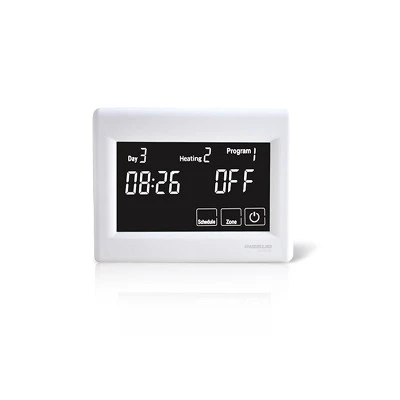
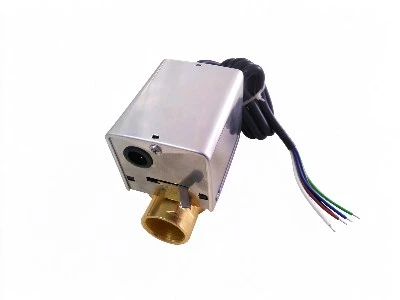
Wiring for underfloor heating thermostats and control valves should generally follow the specific wiring diagrams provided for the equipment, and all work must be performed only after the power supply has been turned off. Typically, a thermostat is connected to both a power supply line and a load line, while a control valve is linked to the thermostat to receive control signals.
First, let's look at the wiring process for an underfloor heating thermostat. Thermostats usually feature clearly marked terminals, generally divided into power input terminals and load output terminals. The power input terminals are connected to an AC power source-typically 220V mains electricity-where it is crucial to correctly distinguish between the live wire and the neutral wire. The load output terminals are connected to the underfloor heating equipment (such as heating cables or heating films) to regulate the heating process.
Next is the wiring for the control valve. Control valves are typically used in conjunction with thermostats to precisely regulate the temperature of an underfloor heating system. The wiring for a control valve is relatively straightforward; it usually has two wires: a control wire that connects to the thermostat to receive switching signals, and a ground wire to ensure the equipment is safely grounded. During installation, ensure that the control wire is connected to the appropriate terminal on the thermostat and that the ground wire is securely connected to a reliable ground point.
For example, consider an underfloor heating system that requires both a thermostat and a control valve. First, consult the thermostat's wiring diagram to connect the power supply line and the load line to their respective terminals. Next, connect the control valve's control wire to the thermostat's control output terminal, ensuring a firm connection. Finally, connect the control valve's ground wire to a ground point to ensure safe operation.
In summary, the wiring of underfloor heating thermostats and control valves must adhere to the manufacturer's wiring diagrams, ensuring that all connections are correct and secure. Always prioritize electrical safety by ensuring the power is completely switched off before beginning any wiring work. Once the wiring is complete, perform a test to verify that the equipment is functioning properly. In cases of uncertainty, it is recommended to consult with a professional installation engineer or refer to the relevant technical documentation.