

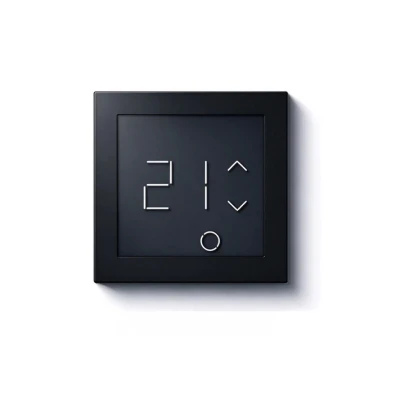
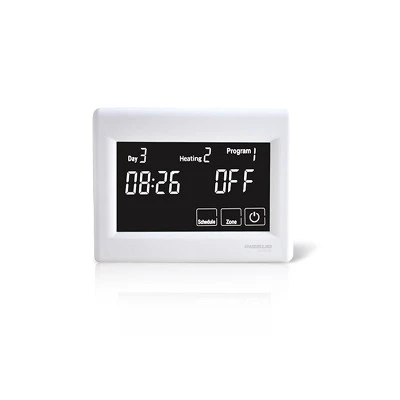
1. The ideal approach is to install an individual room thermostat in each room. This thermostat controls an electric or electro-thermal actuator connected to a manifold equipped with built-in valve cores. This setup allows for precise temperature regulation based on specific setpoints, achieving optimal comfort. While this method yields the best results, it entails higher costs and requires an external power supply and the installation of signal wiring. Alternatively, wireless remote-control systems can be used, though these also come at a significant cost.
2. In this configuration, a single thermostat can manage multiple rooms, while still allowing for individual control within each room. Unlike the first method, the room thermostat does not directly operate the electric or electro-thermal actuators. Instead, it communicates through a distribution unit that regulates the actuators for each room. These actuators then adjust the built-in valve cores, altering the water flow through the individual underfloor heating circuits to maintain the desired temperature in each room.
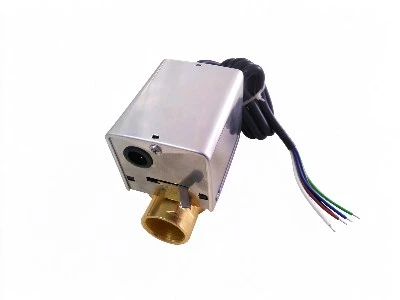
3. This method involves installing an electric two-way valve on the main underfloor heating supply pipe. A room thermostat is placed in a representative location within the living space to set and monitor the temperature. The thermostat compares the current temperature reading against the setpoint and sends a deviation signal to the electric or electro-thermal actuator. This, in turn, adjusts the opening of the two-way valve, modifying the total water supply flow to ensure the room reaches and maintains the desired temperature.