

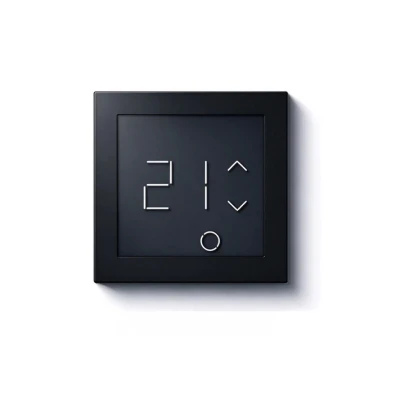
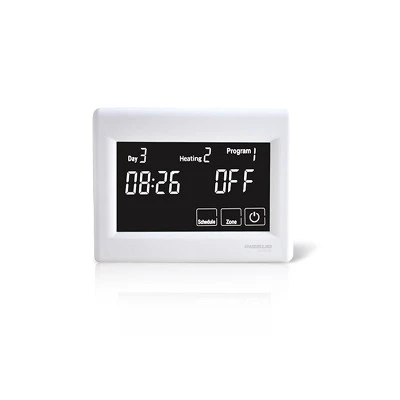

The daily power consumption of a floor heating thermostat is not a fixed value; it is influenced by various factors. However, compared to the total energy consumption of the floor heating system, its impact is relatively minor.
Basic Power Consumption of Floor Heating Thermostats
A floor heating thermostat is a low-power device. Its electricity consumption primarily stems from two sources: standby power and the power required for sending control signals. Standby power consumption is typically between 0.5 and 2 watts, supporting the operation of components such as the display screen and sensors. Control signal power consumption refers to the instantaneous energy used when the thermostat sends commands to the manifold or thermal actuators-approximately 0.1 to 0.3 watts per operation.
Annual Power Consumption by Thermostat Type
Mechanical thermostats: Approximately 30–50 kWh per year.
Smart WiFi thermostats: Slightly higher, at approximately 50–100 kWh per year.
Although smart thermostats offer more advanced features, their energy consumption remains negligible when compared to the total energy usage of the floor heating system itself.
Total Energy Consumption of Floor Heating Systems
The daily energy consumption of a floor heating system is influenced by several factors, including the size of the space, thermal insulation performance, the temperature difference between indoors and outdoors, thermostat settings, and individual usage habits. On average, a floor heating system may consume around 64 kWh per day, though this figure can fluctuate based on specific conditions.
Conclusion
In summary, while it is difficult to provide an exact figure for the daily power consumption of a floor heating thermostat, its contribution to the total energy usage of the floor heating system is minimal. When using floor heating, users should focus more on the energy efficiency of the system itself and implement energy-saving measures to achieve a more economical and environmentally friendly heating experience. For further information, it is recommended to consult the thermostat manufacturer or refer to relevant industry standards.