


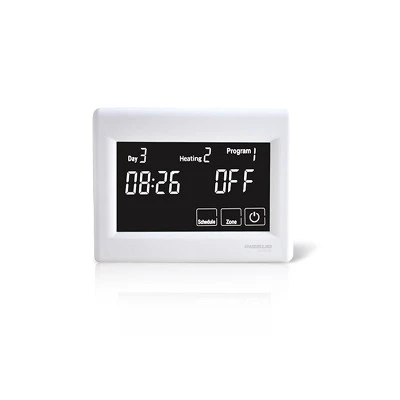
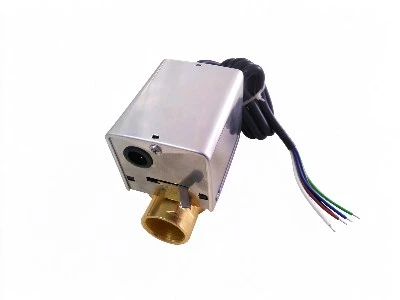
In industrial settings, heat-tracing controllers are typically installed near pipelines, storage tanks, or valves-locations often characterized by the presence of flammable gases, vapors, or dust. Should an electrical spark occur inside a controller, or if its surface temperature becomes excessively high, it could ignite the surrounding explosive atmosphere. The core objective of explosion-proof certification is to verify that the equipment will not act as an ignition source within a designated hazardous area.
To understand this, it is necessary to dispel a common misconception: explosion-proof certification is not merely a matter of encasing a device in an "explosion-proof shell." Rather, it is a comprehensive assessment system focused on the potential for ignition, encompassing variables such as circuit energy, surface temperatures, enclosure design, sealing methods, and installation conditions. Because heat-tracing controllers must both regulate heating power and acquire temperature signals-incorporating both high-voltage power circuits and low-voltage signal circuits-the evaluation criteria are more complex than those for standard switching devices.
The certification process begins not with the submission of equipment for testing, but with the determination of the hazardous area classification where the device will be deployed. Different zones impose varying requirements for equipment protection levels. For instance, Zone 0 typically permits only intrinsically safe or specially designed equipment, while Zones 1 and 2 allow for a broader range of protection methods, such as flameproof (explosion-proof) enclosures, increased safety, or encapsulation. Common configurations for heat-tracing controllers include using a flameproof enclosure combined with intrinsically safe signal circuits, or employing full encapsulation supplemented by temperature-limiting protection. Once the zone classification is established, the appropriate explosion-proof type and temperature class can be selected.
Temperature class is a critical yet frequently overlooked aspect of heat-tracing controller certification. It ensures that the maximum surface temperature of the equipment remains below the ignition temperature of any surrounding combustible substances. For example, a T4 rating requires that the surface temperature does not exceed 135°C, while a T6 rating requires it to remain below 85°C. Factors such as the controller's thermal design, the switching frequency of internal relays, and the wiring configuration at the heating output terminals all influence surface temperature. During certification testing, the device is operated under worst-case conditions-such as maximum load, extreme ambient temperatures, or continuous operation during a fault-to measure the temperatures of both the enclosure and internal components.
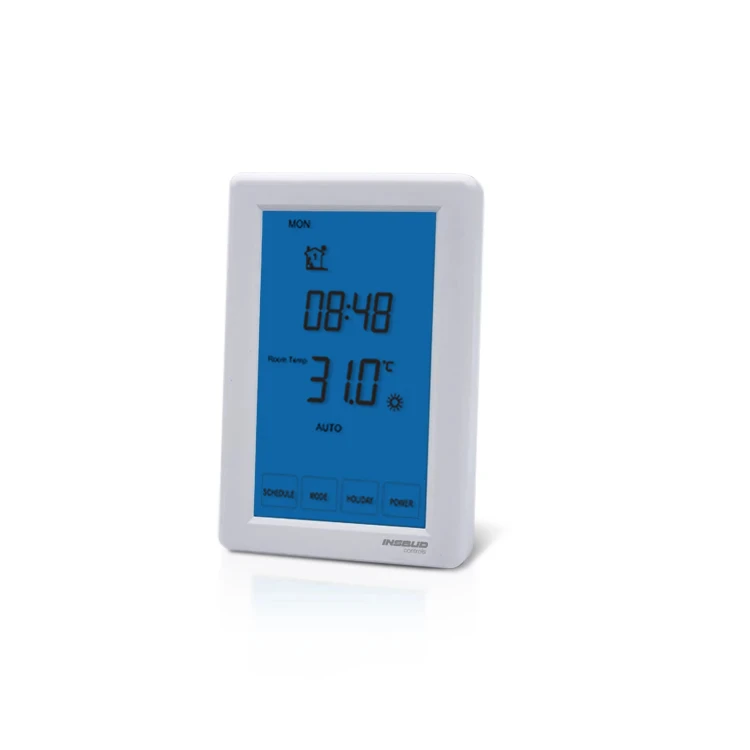
Next comes structural inspection. For flameproof heat-tracing controllers, the enclosure must be robust enough to withstand an internal explosion without sustaining damage, and it must prevent any flames from propagating to the external environment. This requires the enclosure to possess sufficient mechanical strength, with specific gaps and lengths maintained at the mating surfaces (joints). In the case of encapsulated (potted) equipment, components capable of producing sparks must be completely encased in resin to prevent contact with explosive gases. Intrinsically safe (IS) design limits the energy within a circuit, ensuring that neither electrical sparks nor thermal effects are sufficient to trigger ignition. For heat-tracing controllers, a common approach is to design the temperature acquisition and signal processing sections as intrinsically safe circuits, while the heating output section is constructed using flameproof (explosion-proof) or encapsulated methods. Such hybrid designs require individual evaluation, followed by verification that the combined components do not adversely affect one another.
Certification testing also encompasses enclosure ingress protection (IP) ratings, dielectric strength (insulation) tests, and assessments under abnormal operating conditions-such as output short circuits, sensor wire breaks, or relay contact welding. The objective is to verify that, in the event of such faults, the equipment does not generate ignition sources (i.e., temperatures or energy levels) exceeding specified limits. For heat-tracing controllers incorporating software control, it must also be assessed whether a software failure could lead to a loss of control over the output. Some certification bodies may require the submission of software flowcharts and fault tree analyses.
Regarding documentation, applicants must submit product drawings, circuit schematics, bills of materials (BOM), proof of enclosure material specifications, details on sealing components, nameplate drafts, and installation manuals. The BOM must identify components that impact explosion-proof performance-such as relays, terminals, power supply modules, and temperature sensor interfaces-which typically require their own individual certifications or must comply with relevant standards. The installation manual must clearly specify requirements for cable entry, grounding, ambient temperature ranges, and the permitted types and lengths of sensors; these details are reviewed as part of the certification process.
Factory audits are also a mandatory component of explosion-proof certification. Certification bodies verify production consistency to ensure that mass-produced units align with the explosion-proof design specifications of the tested samples. This includes evaluating the quality of enclosure castings, the machining precision of flameproof joints, process parameters for encapsulation, and the accuracy of nameplate information and traceability markings. If a manufacturer lacks an established quality assurance system, the certification body may mandate additional annual surveillance audits.
For heat-tracing controllers that have already obtained certification, any design changes affecting their explosion-proof performance necessitate a re-evaluation. For instance, changing the material of an enclosure, adjusting the dimensions of flameproof joints, modifying the layout of a circuit board, or replacing a relay model may necessitate supplementary testing or recertification. This is frequently overlooked in practical engineering, often resulting in a discrepancy between the equipment deployed in the field and the specifications detailed in its certification.
From an operational perspective, the selection process requires verifying the model number, explosion-proof marking, temperature class, and ambient temperature range as stated on the certificate. During installation, it is essential to follow the manufacturer's instructions regarding cable sealing, grounding, and isolation. During maintenance, flameproof enclosures must not be opened arbitrarily, and the wiring parameters of intrinsically safe circuits must not be altered. These operational constraints are, in essence, the conditions upon which the validity of the explosion-proof certification rests.
In summary, the core of explosion-proof certification for heat-tracing controllers lies not merely in obtaining a certificate, but in establishing a verifiable, traceable, and sustainable technical framework designed to mitigate ignition risks. Every step of the certification process-including hazardous area classification, selection of protection methods, determination of temperature classes, structural inspection, abnormal-condition testing, and documentation review-corresponds to a specific aspect of safety in the field. Understanding the logical connections between these elements is far more meaningful than simply memorizing the name of a particular certification body.