

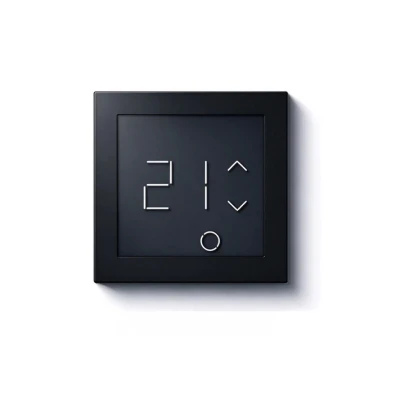
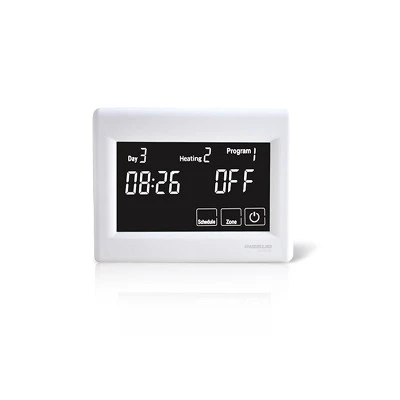
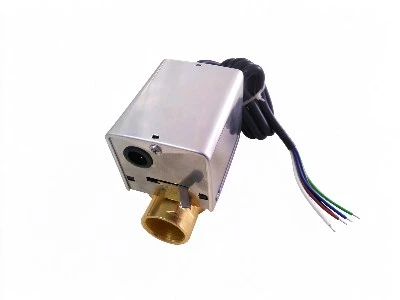
Underfloor heating thermostats generally fall into two categories: mechanical and electronic.
Mechanical Thermostats: These operate using an internal bimetallic strip or a metal diaphragm, which senses changes in ambient temperature based on the principle of thermal expansion and contraction. When the ambient temperature falls below the set value, the bimetallic strip or metal diaphragm undergoes physical deformation, triggering the heating system to raise the indoor temperature. Conversely, if the temperature exceeds the set value, the thermostat can activate a cooling system to lower the indoor temperature.
Electronic Thermostats: These use a thermistor-a component whose electrical resistance changes with temperature-to sense the ambient environment. By precisely measuring the ambient temperature, an electronic thermostat can monitor and regulate the operation of connected heating or cooling equipment in real time. A relay serves as the key actuating component; upon receiving a command from the thermostat, it controls the activation or deactivation of the heating or cooling system, thereby enabling precise temperature control. Some electronic models also feature an LCD screen and programmable settings, allowing for automated heating schedules tailored to user needs and providing a more intelligent, convenient experience.
Regardless of whether they are mechanical or electronic, the ultimate goal of all underfloor heating thermostats is to ensure that the indoor temperature remains consistently within a desired, comfortable range.