

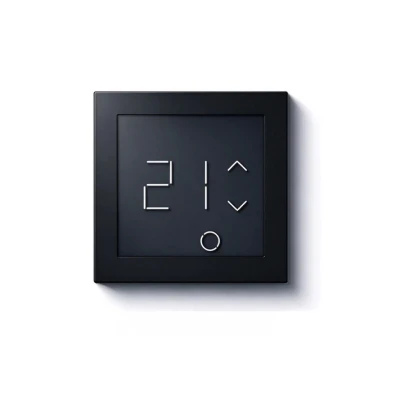
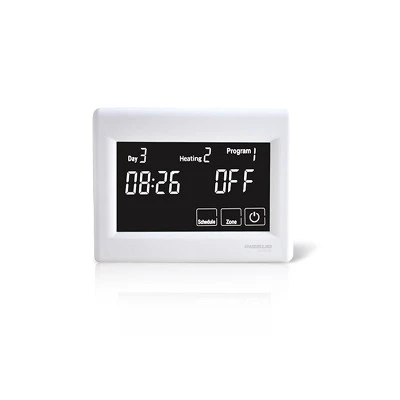
A room thermostat is a component used to maintain a constant indoor temperature by controlling heating and cooling equipment; it is primarily applied in the heating and cooling systems of buildings such as office complexes, shopping malls, and villas. Using either an integrated or external NTC temperature sensor, the device monitors temperature in real time. A microcontroller compares the current reading against a setpoint and regulates equipment-such as air conditioning units, underfloor heating systems, or fan coil units-accordingly. Depending on the specific application, these thermostats are categorized into types for central air conditioning, electric underfloor heating, hydronic (water-based) underfloor heating, wall-mounted boilers, and electric heaters. KNX-based room controllers, equipped with temperature sensors, are designed for heating or cooling applications involving convection heaters or conventional HVAC systems.
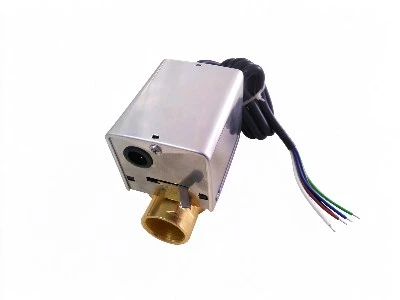
These devices feature either an LCD screen or a mechanical display, with user interfaces consisting of touch-sensitive buttons or control knobs. They typically offer four-period programming and PID-based temperature regulation. Certain models, such as the Heatit ET-7AW, include a touchscreen interface, support Wi-Fi connectivity and voice control, and offer advanced features like dual-sensor monitoring, programmable scheduling, and open-window detection. Some models utilize LoRa wireless networking technology for centralized remote control, connecting to a gateway via a wireless bridge. Common functions include anti-freeze/vacation modes, dual-temperature/dual-control capabilities, and sensor fault alerts; they can also integrate with external peripherals, such as window/door contact sensors. Key models, such as the Siemens RD series, support automatic switching between heating and cooling modes. They operate at 230V AC and should be installed 1.5 meters above the floor to avoid interference from heat sources. Wireless room controllers can work in tandem with switching actuators to regulate room temperature by adjusting the duty cycle of valves. In terms of energy efficiency, these devices reduce consumption through time-based scheduling and, when combined with building insulation, can maintain a baseline temperature of 8–10°C.