

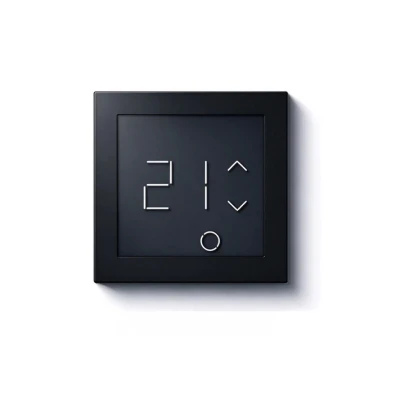
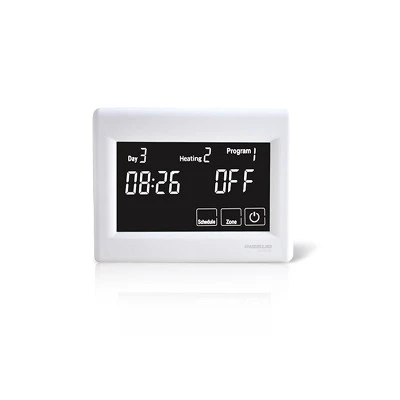
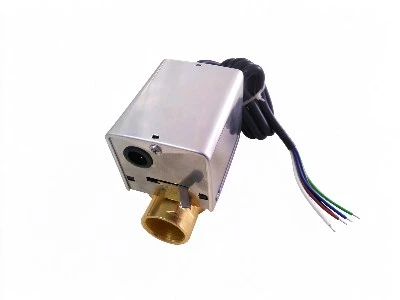
The operating principle of an electro-thermal actuator is as follows: a temperature controller senses the indoor temperature and, based on a preset value, regulates a heating element within the actuator, which in turn drives the opening or closing of a valve. Specifically:
Temperature Sensing and Control: The system consists of three components: a temperature controller, an electro-thermal actuator, and a valve. The temperature controller is typically mounted on an interior wall and connected to the actuator via a cable. When the indoor temperature reaches a preset value, the temperature controller is triggered.
Heating Element Activation: Once triggered, a positive temperature coefficient (PTC) heating element inside the actuator begins to generate heat, causing the element to expand.
Valve Actuation: The expansion of the heating element drives the connected valve to open, allowing the medium (such as water) to flow through. Conversely, when the indoor temperature drops, the controller cuts off power; the actuator cools down, the expansion component contracts, and the valve closes.
Furthermore, electro-thermal actuators typically feature an automatic recovery function, allowing them to return to their previous operating state once power is restored. This mechanism enables electro-thermal actuators to provide efficient temperature control across a wide range of systems and equipment, including radiator thermostatic regulation, two-way valve control, manifold management, underfloor heating systems, and zone valve regulation.